

In 2026, the Italian luxury real estate market took on a role that goes beyond real estate investment: it became a tool for asset diversification for international capital.
The data confirms it. According to Knight Frank, Italy is establishing itself as Europe's tax magnet, with the new residents regime continuing to drive internationally mobile wealth to Milan, Rome, and the lake districts. The Engel & Völkers Italy Market Report, produced with the scientific support of Nomisma, indicates that international buyers represent an average of 35% of the prime market, with an average transaction value exceeding €1.65 million.
The strongest demand comes from the United States, Switzerland, the Netherlands, Germany and Scandinavian countries.
The geography of the luxury real estate market
The market is not homogeneous. Each district has its own dynamics, buyer profiles, and legal challenges.
- Milan. The most dynamic market. Prices have increased approximately 49% since 2017. The 2025 record, a duplex in Brera sold for $28 million, sets a new high. The Scalo Romana district, the Olympic village for the Milan-Cortina 2026 Games, has seen a visible boost. Profile: HNW buyer with tax residency or intent to relocate.
- Lake Como. The ultimate ultra-prime destination. Moltrasio between €5,000 and €7,000/sq m, Cernobbio between €3,600 and €5,300/sq m, according to 2026 municipal data compiled by Immobiliare.it and Idealista. Lakefront period properties are often subject to cultural restrictions. Buyer profile: international, often American or Northern European, waterfront-oriented.
- Cortina d'Ampezzo. Prime prices between €19,500 and €21,500/sq m, up 10% year-over-year. Knight Frank notes that Cortina remains significantly below St. Moritz and Courchevel. This should be carefully assessed: as Diletta Giorgolo of Italy Sotheby's International Realty noted, the Olympic impact is more likely on tourism than on real estate, and the conversion from tenants to buyers remains an open question.
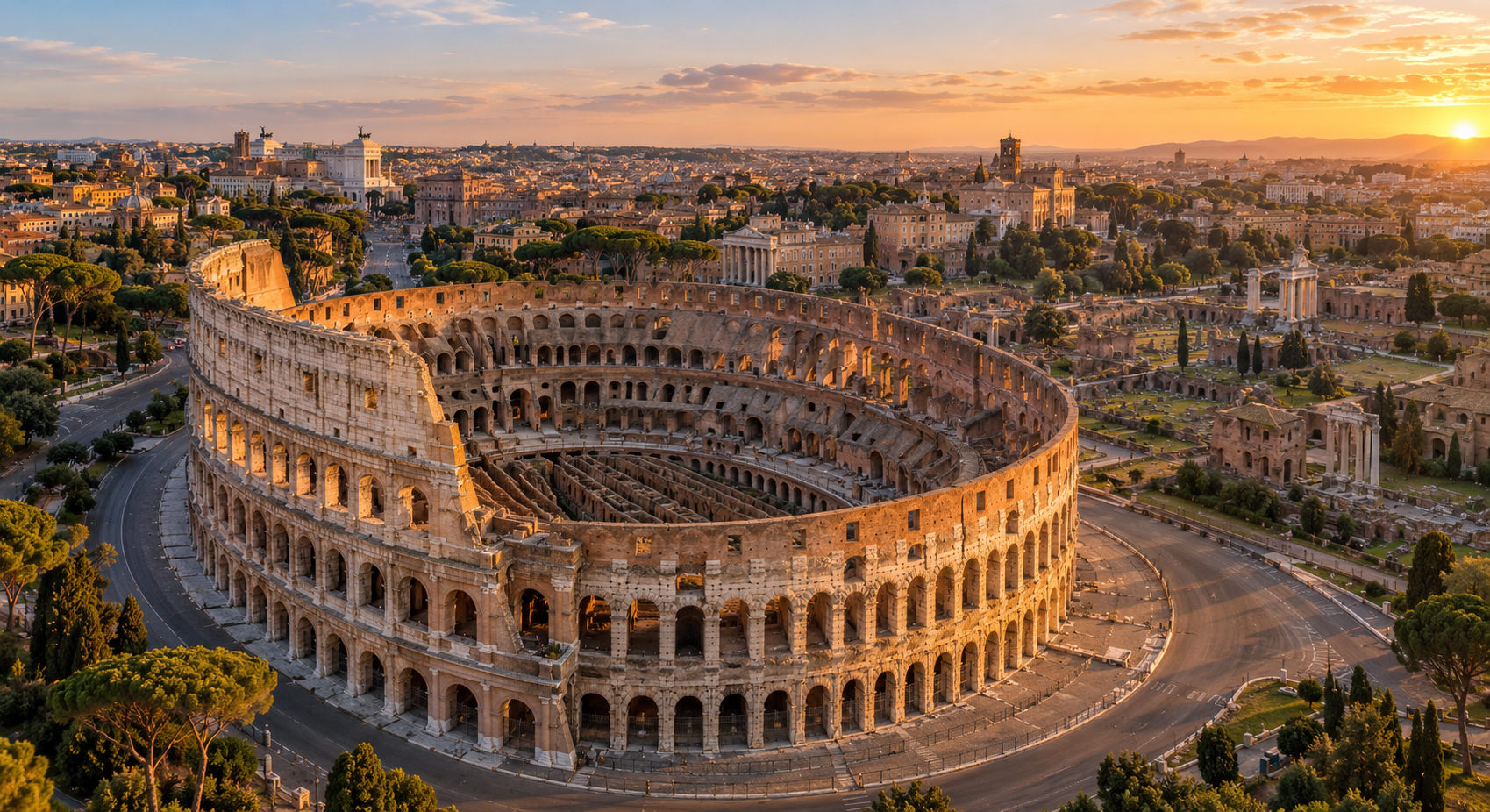
- Rome. A premium market with unique characteristics: the percentage of historic and protected properties is the highest in Italy. Parioli, Prati, the historic center, and Aventine. Profile: Buyers oriented toward cultural value and stability, often with a multigenerational horizon.
- Tuscany, Forte dei Marmi, Costa Smeralda, Puglia. The market for country homes, coastal villas, and historic estates. Demand is growing from the United States and Northern Europe.
The structural undersupply of ultra-prime
The most significant data for 2026 does not concern the prices of the luxury real estate market, but its inventory.
The Italian ultra-prime market is experiencing a structural undersupply. The rarity of properties that meet contemporary international standards (energy efficiency, modern systems, urban planning compliance, professional management) is such that those who acquire a compliant prime asset today are entering a market where demand consistently exceeds qualified supply.
Properties in energy class A/B command a premium of around 500 euros per square meter, a gap set to widen with the entry into force of the EU Directive on the energy efficiency of buildings, which introduces progressive minimum requirements between 2026 and 2030.
This has a direct consequence on the notarial level: the property's compliance becomes an element of value, not just of legitimacy. A thorough verification of the urban planning, cadastral, and energy status is no longer a formal requirement: it is part of the asset's valuation.
The legal issues of the luxury real estate market
Buying in the Italian luxury segment means dealing with complexities that the mainstream market does not present.
Cultural restrictions and the State's right of pre-emption. Properties of declared historical-artistic interest are subject to the Cultural Heritage Code. The transfer must be reported to the Ministry, which has 60 days to exercise its right of pre-emption. The transaction is subject to a condition precedent, and this must be planned in the timing of the transaction.
Complex provenances. Historic homes typically pass through successions and family donations layered over time. Each step must be reconstructed and verified. The reform introduced by Law 182/2025 has significantly improved the third-party purchaser's position with respect to restitution proceedings, but verification of provenance remains essential.
Building irregularities. Extensions, mezzanines, changes in use, and unresolved internal works: period properties frequently present these. The declaration of urban planning compliance issued in the deed has specific legal effects. An undetected irregularity can compromise the property's future marketability.
Holding Structures. Partnerships, trusts, real estate holding companies: many HNW buyers are considering holding structures other than direct ownership. Each structure has tax, inheritance, and transferability implications that should be considered before the purchase, not afterward. A complete comparison is available in the guide to real estate holding structures.
The notary in the luxury real estate market
In the prime segment, the notarial role takes on a different specific weight. It's not just about guaranteeing the validity of a deed: it's about ensuring that an asset destined to remain in the family estate for decades is acquired on a legally sound basis. For more information on what the notary actually verifies, and what the buyer is responsible for, see the guide dedicated to the role of the notary.
For those who are transferring their tax residency to a new purchase, the guide to the flat tax for new residents completes the picture . Those unable to attend the signing can find solutions in the guide to notarized power of attorney from abroad . The National Council of Notaries also publishes updated studies on restrictions and provenances.
The Spinaci Notary's Office assists international buyers in the luxury real estate market in Rome and the Lazio region, operating in Italian and English and coordinating with the client's tax, technical, and legal advisors.
For a confidential consultation: +39 06.807.0943, spinaci@notariato.it, or fill out the contact form below the article.
